In the ever-evolving world of culinary innovation, where traditional boundaries are delightfully blurred, a truly captivating creation has emerged: the cruffin. Imagine the flaky, buttery layers of a classic French croissant, meticulously baked into the familiar, convenient shape of a muffin. This ingenious pastry hybrid isn't just a whimsical name; it's a testament to modern baking ingenuity, offering a unique textural and flavorful experience that has captured the hearts (and palates) of dessert lovers worldwide.
Unveiling the Cruffin: A Culinary Mashup Explained
At its heart, a cruffin is precisely what its name implies: a harmonious marriage between a croissant and a muffin. But this isn't simply croissant dough baked in a muffin tin; it's a carefully crafted pastry designed to maximize the best attributes of both its progenitors. The fundamental ingredient is laminated croissant dough, a rich, yeast-leavened dough enriched with a generous amount of butter, which is folded and rolled multiple times to create hundreds of ultra-thin, distinct layers.
This meticulously prepared dough is then rolled into a spiral, much like a cinnamon roll, and carefully placed into individual muffin molds. During the proofing and baking process, the dough expands, filling the muffin tin and developing its characteristic cylindrical shape. The magic truly happens in the oven, where the high butter content and layered structure result in an exterior that bakes to a glorious golden crispness, giving way to an interior that is remarkably airy, tender, and intensely buttery. It's a pastry that defies simple categorization, offering the pull-apart delight of a croissant with the robust, hand-held form factor of a muffin.
The Anatomy of a Cruffin: Texture, Taste, and Technique
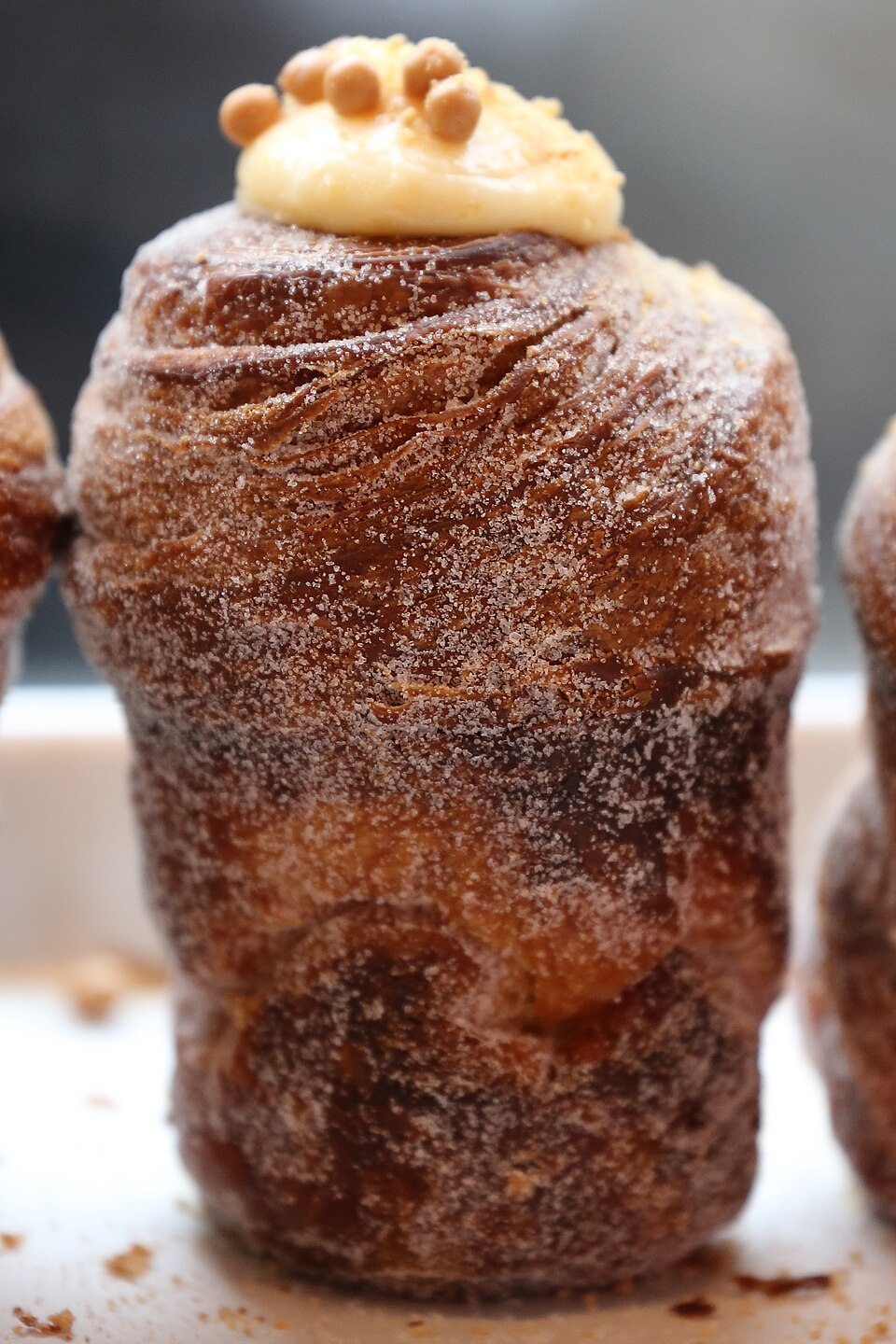
To truly appreciate the cruffin, one must delve into its distinctive physical and sensory characteristics. Visually, a perfectly baked cruffin presents a tall, rounded profile, often crowned with an artfully ridged "muffin-top" where the spiraled dough has expanded and caramelized. Its golden-brown crust gleams with a slightly glossy sheen, hinting at the rich butter within. The outer layer offers a satisfyingly audible crunch upon first bite, a delightful contrast to the tender interior.
Internally, the cruffin is a marvel of delicate architecture. Each pastry is comprised of dozens of gossamer-thin, pull-apart layers, characteristic of expert Viennoiserie. These layers are moist, soft, and infused with the rich, yeasty aroma of high-quality butter. The overall density of the cruffin strikes a perfect balance, feeling more substantial than a typical croissant but far lighter and flakier than a dense muffin. Sensorially, it delivers a deeply buttery and subtly sweet flavor, often complemented by the caramelization of its exterior. Its complex texture—crunchy outside, tender and airy inside—makes every bite an adventure. This intricate composition emphasizes the tenderness and butteriness that define a truly exceptional pastry, serving as a versatile canvas for an array of delightful fillings.
From Melbourne's Lune Croissanterie to Global Phenomenon: The Cruffin's Journey
The modern cruffin, as we know and love it today, has a surprisingly recent and well-documented origin story. Its culinary journey began in July 2013, thanks to the innovative mind of pastry chef Kate Reid at Lune Croissanterie in Melbourne, Australia. Reid, renowned for her scientific approach to viennoiserie, sought to combine the delicate flakiness of her acclaimed croissants with a novel presentation. Her initial cruffins were offered with tantalizing fillings such as zesty lemon curd and aromatic kaya custard, instantly captivating local palates and marking a fresh twist on traditional European pastries.
The cruffin's fame rapidly spread beyond Australian shores, particularly after its introduction to the United States in November 2014. It was Ry Stephen, a former Lune employee, who brought the cruffin to an eager American audience at Mr. Holmes Bakehouse in San Francisco. There, the cruffin became an overnight sensation, drawing notoriously long lines and significant media attention. Mr. Holmes Bakehouse even trademarked the name "cruffin" for their version, solidifying its status as a signature item. This surge in popularity, however, also highlighted the pastry's commercial value, leading to controversies such as a widely reported recipe theft incident in 2015, which underscored the high stakes of culinary innovation.
Following its American debut, bakeries worldwide quickly embraced the cruffin, adapting and creating their own versions. Its enduring appeal is evident in the continued success of Lune Croissanterie, which, as of 2025, operates seven locations across Australia, a testament to the lasting power of this innovative treat. The cruffin's creation beautifully exemplifies the broader trend of pastry hybrids, blending familiar techniques with novel forms to continuously captivate and delight modern palates. To dive deeper into its fascinating history, explore The Cruffin Story: From Melbourne Innovation to Global Craze.
Beyond the Basic Cruffin: Filling and Flavor Innovations
While a plain cruffin is a delight in itself, its unique structure makes it an ideal vessel for an astonishing array of fillings and flavor combinations. The cylindrical shape and sturdy yet flaky interior can comfortably house both sweet and savory surprises, elevating the pastry experience. The ridges and folds of the "muffin-top" are particularly adept at holding glazes, dustings, and small dollops of cream, adding to both the visual appeal and taste sensation.
- Sweet Fillings: These are arguably the most popular. Common choices include classic pastry cream, rich chocolate ganache, various fruit curds (lemon, passionfruit, raspberry), berry jams, or even flavored custards like the original kaya. Some bakeries get creative with seasonal fruit compotes, spiced apple fillings, or decadent caramel sauces. A simple yet incredibly popular variation involves rolling the dough with a cinnamon-sugar mixture, reminiscent of a cinnamon roll, before baking.
- Savory Fillings: For those who prefer a less sweet indulgence, cruffins can be equally delicious with savory additions. Think combinations of cheese and herbs, ham and gruyere, spinach and feta, or even sophisticated mushroom and truffle fillings. These make for excellent brunch items or a sophisticated alternative to traditional savory pastries.
The versatility of the cruffin allows bakeries to innovate constantly, offering rotating specials that reflect seasonal ingredients or culinary trends. This adaptability is a key factor in its sustained popularity, ensuring that there's always a new flavor profile to discover and enjoy.
Making Cruffins at Home: Tips for Success
While the authentic laminated croissant dough for a cruffin can be quite labor-intensive and challenging for the home baker, requiring multiple folds, chills, and a good understanding of dough lamination, there's fantastic news for enthusiasts! You don't need to be a pastry chef to enjoy delicious cruffins in your own kitchen. Thanks to clever adaptations, home bakers can create a remarkably satisfying version with minimal effort.
One of the most popular and accessible methods involves using ready-made crescent roll dough sheets. This ingenious shortcut bypasses the complexities of scratch-made lamination, allowing even beginner bakers to achieve impressive results with just a few ingredients. For an incredibly easy, yet utterly delicious version, you only need four ingredients:
- Crescent roll dough sheets (from a tube)
- Melted butter
- Granulated sugar
- Ground cinnamon
The process is delightfully simple: unroll the crescent dough, brush it with melted butter, sprinkle generously with the cinnamon-sugar mixture, roll it up tightly, slice it into individual spirals, and then bake them in greased muffin tins until golden and fluffy. The result is a tender, buttery pastry with a delicious cinnamon swirl, embodying the spirit of a cruffin without the fuss. For a detailed, step-by-step guide to this simplified baking method, check out Easy Cruffins: Master This 4-Ingredient Recipe at Home.
Practical Tips for Homemade Cruffins:
- Don't Overfill: If adding fillings (especially to scratch-made dough), be mindful not to overfill, as it can make rolling difficult or cause leakage during baking.
- Grease Your Muffin Tins Well: Cruffins are buttery, and they need to release cleanly from the tin. A good layer of butter or non-stick spray is essential.
- Chill for Easier Handling: If working with scratch dough, ensure it's properly chilled between steps. For crescent dough, keep it cold until ready to use.
- Experiment with Toppings: After baking, dust with powdered sugar, drizzle with a simple glaze (lemon, vanilla, or chocolate), or sprinkle with nuts for extra flair.
- Serve Warm: Like most pastries, cruffins are best enjoyed warm, allowing the butter to be perfectly melted and the layers to be at their most tender.
The cruffin stands as a brilliant example of culinary innovation, successfully blending the beloved characteristics of two distinct pastries into one irresistible treat. From its inventive birth in Melbourne to its meteoric rise as a global bakery staple, this flaky, buttery hybrid has cemented its place in the modern pastry pantheon. Whether you savor a masterfully crafted cruffin from an artisan bakery or try your hand at a simplified homemade version, its unique texture and rich flavor promise a truly memorable experience. The cruffin isn't just a pastry; it's an edible testament to the endless possibilities that arise when creativity meets tradition in the kitchen.
